What We Miss When We Rush: The Hidden Learning in Everyday Moments
In early years practice, we often talk about being “present”, “attuned”, and “responsive”. Yet the reality of busy rooms, competing demands, and the pressure to “get things done” can pull practitioners into a pace that leaves little space for genuine noticing. When we rush, we don’t just miss details, but we miss meaning. And meaning is where children’s learning lives.
This blog explores what becomes visible when we slow down, why it matters, and how early years teams can create environments where everyday moments are recognised as powerful learning opportunities.
Why rushing changes what we see
When our pace increases, our attention narrows. We begin to focus on tasks rather than children, behaviours rather than intentions, and outcomes rather than processes. In this state, observations become surface-level:
“She played with the blocks.”
“He enjoyed the water tray.”
“They took turns.”
These statements describe what happened, but not why it mattered.
Rushing makes us miss:
The thinking behind children’s actions
The subtle cues that show emotional regulation
The early signs of emerging interests
The social negotiations happening quietly between peers
The small moments where children develop their learning dispositions, children test theories, solve problems, or express identity
Children are always communicating — but we only hear them when we slow down enough to listen.
The hidden learning inside everyday moments
1. Problem‑solving an integral part of play
A child repeatedly pours water from one container to another. At a glance, it’s simple exploration. But with slower observation, we might notice:
Adjustments in grip.
Strengthening of hand muscles from one day to the next. The child’s whose hands use to shake pouring a pint bottle, wo can now pour it seamlessly.
Changes in pouring height.
Careful monitoring of water levels.
Visual tracking of what is happening.
Attempts to predict overflow.
The development of the trajectory schema that fits with the rest of their play.
This is mathematical reasoning, scientific enquiry, and executive functioning — all happening in a moment that could easily be overlooked.
2. Social learning in quiet interactions
Two children building side‑by‑side may appear to be playing independently. But look closer:
One child subtly mirrors the other’s block choices
A shared rhythm emerges
Eye contact becomes a form of negotiation
A collaborative structure forms without words
This is early teamwork, communication, and relationship building — invisible unless we slow down.
3. Emotional regulation in small gestures
A child pauses before reacting to frustration. They:
Take a breath
Look around for reassurance
Choose a different resource
This moment shows developing self‑regulation — a foundational skill for lifelong learning.
Why slowing down strengthens pedagogy
Slowing down isn’t just about better observation; it’s about better decision‑making.
When practitioners notice more, they:
Plan more responsively
Scaffold learning more effectively
Understand children’s motivations
Reduce assumptions and bias
Build stronger relationships
Are more attuned to know whether to interact or stand back.
Deep noticing leads to deep teaching.
Creating environments that support slower practice
1. Build “slow spaces” into the day
Not every moment can be calm — but some can. Create pockets of time where adults intentionally slow their pace, such as:
Arrival routines
Outdoor exploration
Small‑group play
Transitions with reduced urgency
These moments become anchors for deeper observation.
2. Reduce unnecessary noise and movement
Environmental pace influences human pace. Consider:
Decluttering visual noise
Minimising constant movement
Creating predictable routines
Offering cosy, contained spaces
Calmer environments make it easier to notice subtle learning.
3. Prioritise presence over productivity
Shift the mindset from “What do I need to get done?” to “Who do I need to see?”.
Leaders can support this by:
Reducing paperwork that doesn’t serve pedagogy
Encouraging reflective practice
Modelling slow, intentional interactions
Protecting time for observation
4. Use observation prompts that encourage depth
Instead of “What did the child do?”, try:
“What was the child trying to figure out?”
“What thinking did you notice?”
“What patterns did you see?”
“What does this moment tell us about who they are?”
“How did the environment shape the learning?”
These questions slow practitioners down and deepen insight.
The impact of slowing down
When teams commit to slowing down, something powerful happens:
Children feel more seen
Practitioners feel more connected
Learning becomes more visible
Planning becomes more meaningful
The environment becomes more relational
Most importantly, children’s everyday moments, the ones that often pass unnoticed, become recognised as the rich, complex learning experiences they truly are.
Children do not rush. They move at the pace of curiosity, not efficiency. When we match their pace, we see their learning more clearly, respond more thoughtfully, and build environments where every moment matters.
Slowing down isn’t a luxury. It’s a pedagogical choice. And it’s one that transforms practice.
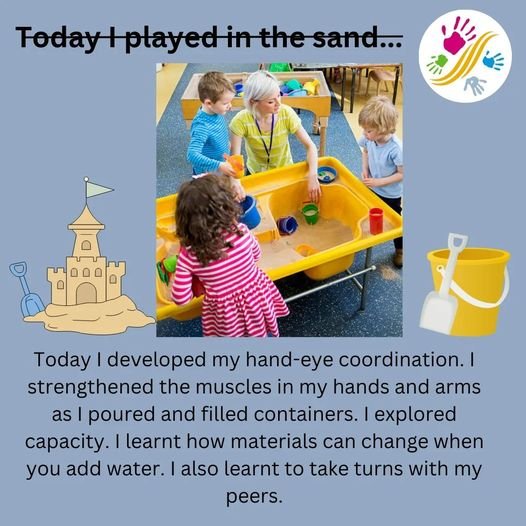
A set of 14 images that can be either printed or used on social media to show the skills and development that is happening as children play, learn and grow.
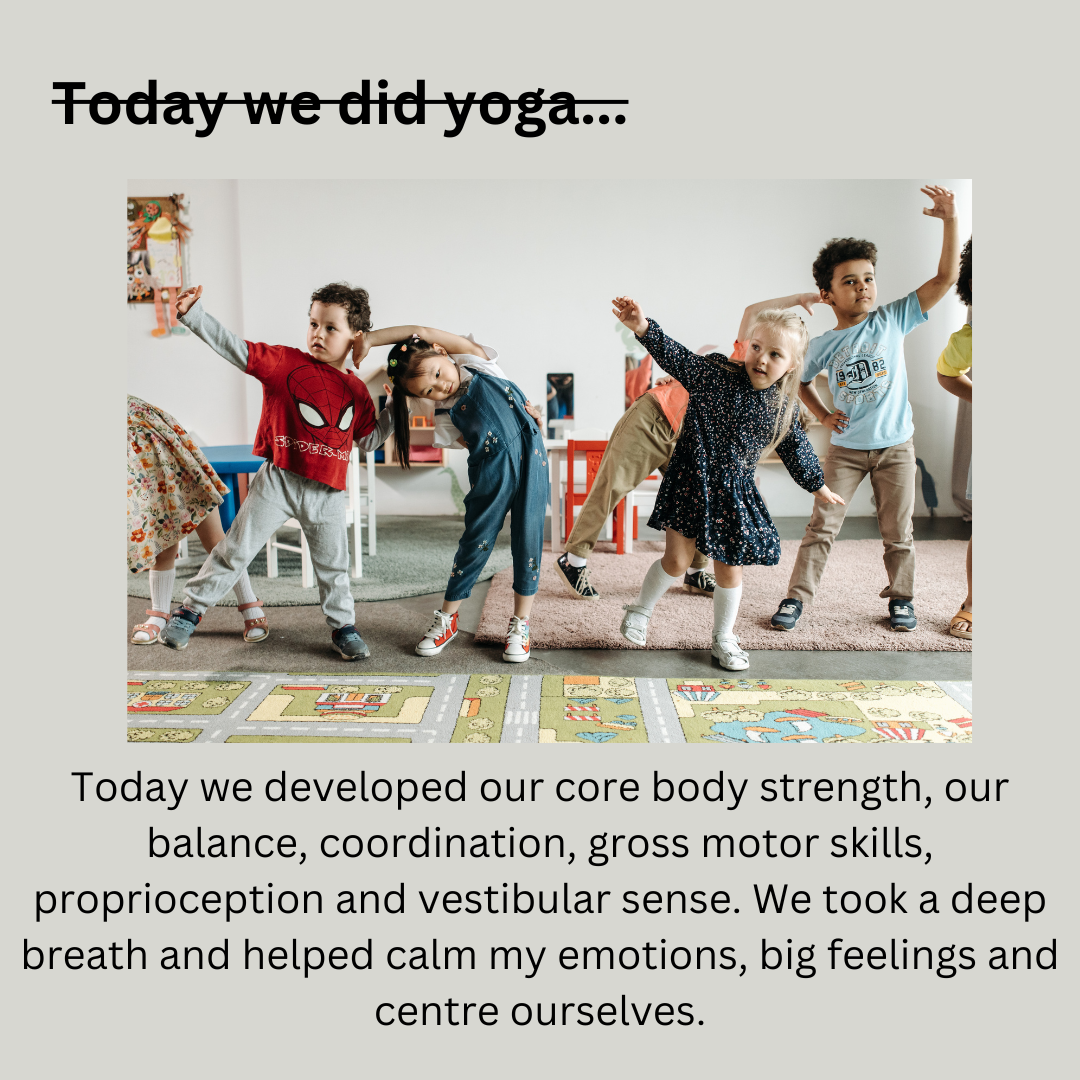
A series of images that can be used on social media or to share with parents and carers. Explaining child development and potential learning in various activities within the early years.
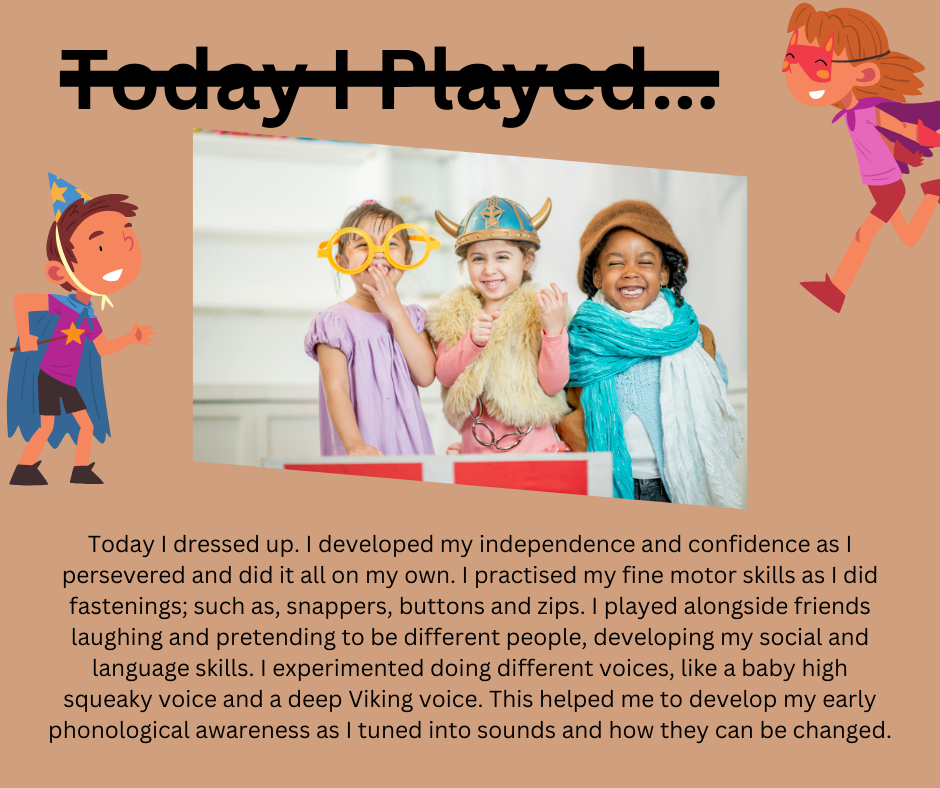
A set of 5 images and texts, describing potential learning in the following play scenarios.
Dressing-up.
Vets.
Babies.
Superheroes.
Mud kitchen.
These are available as a digital download. Great for sharing in settings with parents on social channels, or printing and displaying.