The start of a brand-new academic year is fast approaching — September 2026 is practically waving at us from around the corner. And if you work in early years, nursery, preschool or any education setting, you’ll know this question is coming:
“So… what are your plans for next year?”
Cue the mixed emotions. You might feel excited, nervous, overwhelmed, ecstatic, anxious, hopeful… or even sc-cited (that perfect blend of scared and excited we all pretend isn’t real but absolutely is!).
Some of us hear that question and immediately launch into a confident “Well, I’ve already got x-y-z planned!”. Others roll their eyes and mutter “survive” or “please, not more paperwork”. And some of us feel both inspired and overwhelmed at the same time — because planning for a whole academic year is no small task.
If you’ve ever wanted to scream “Great! But where do I even start?!”, you’re not alone.
🌼 Where I Always Started as an Early Years Manager
When I was managing an Early Years setting, this question was my cue to begin our Continuous Development Plan — the backbone of our growth, reflection, and improvement for the year ahead.
And honestly? The best place to start is with reflective questions. These work brilliantly in leadership meetings, team training, staff supervisions, or even informal chats over a cup of tea.
Here are the questions I always used:
What have we achieved in the last year? “What are we proud of?” is often the follow-up that gets people smiling.
How have individual staff progressed? Think confidence, skills, qualifications, wellbeing, teamwork.
What training have we completed? And importantly — where are we with compulsory training?
Where have we struggled? Be honest. This is where the gold is.
What did last year’s cohort teach us? The good, the challenging, the surprising — it all matters.
What do we already know about this year’s cohort? Early insights help shape your environment and planning.
What worked well (and not so well) in our environment? Indoors, outdoors, routines, transitions, resources — everything is up for reflection.
What did our parents say last year? Feedback forms, surveys, passing comments — they’re all valuable.
Once we had reflected, we used our answers to build a clear, purposeful Action Plan for the year ahead.
📝 Creating Your Action Plan
This is where your ideas become real, practical, and achievable. Whether you use a template, a digital planner, or a giant sheet of paper stuck to the staffroom wall, your action plan should be:
Collaborative — created as a team or with trusted colleagues.
Alive — something you refer to in everyday conversations, not a document that gathers dust.
Central to staff supervisions — it keeps everyone aligned and accountable.
Clear on responsibilities — assign tasks so everyone knows their role.
SMART — specific, measurable, accurate, realistic, and time-related.
Your action plan becomes your roadmap. It keeps your team focused, motivated, and connected to shared goals.
🌟 Linking CPD to Your Yearly Planning
If you read our previous blog post, CPD That Changes Practice, you’ll know that meaningful professional development isn’t about ticking boxes — it’s about transforming everyday practice.
Your action plan is the perfect place to embed CPD that actually makes a difference.
Think about:
What training genuinely improved practice last year?
What CPD do staff want this year?
What CPD does your cohort need this year?
How can CPD be woven into your continuous development plan rather than bolted on?
When CPD and action planning work hand-in-hand, your setting grows in a purposeful, sustainable way — and your team feels empowered rather than overwhelmed.
🌱 Final Thoughts
Planning for the next academic year doesn’t have to feel scary or chaotic. Start with reflection, build a clear action plan, and connect your CPD to real practice. Before you know it, you’ll have a roadmap that supports your team, your children, and your setting all year long.
And remember — you don’t have to do it alone. Growing Together Early Years is here to help you grow, reflect, and thrive.
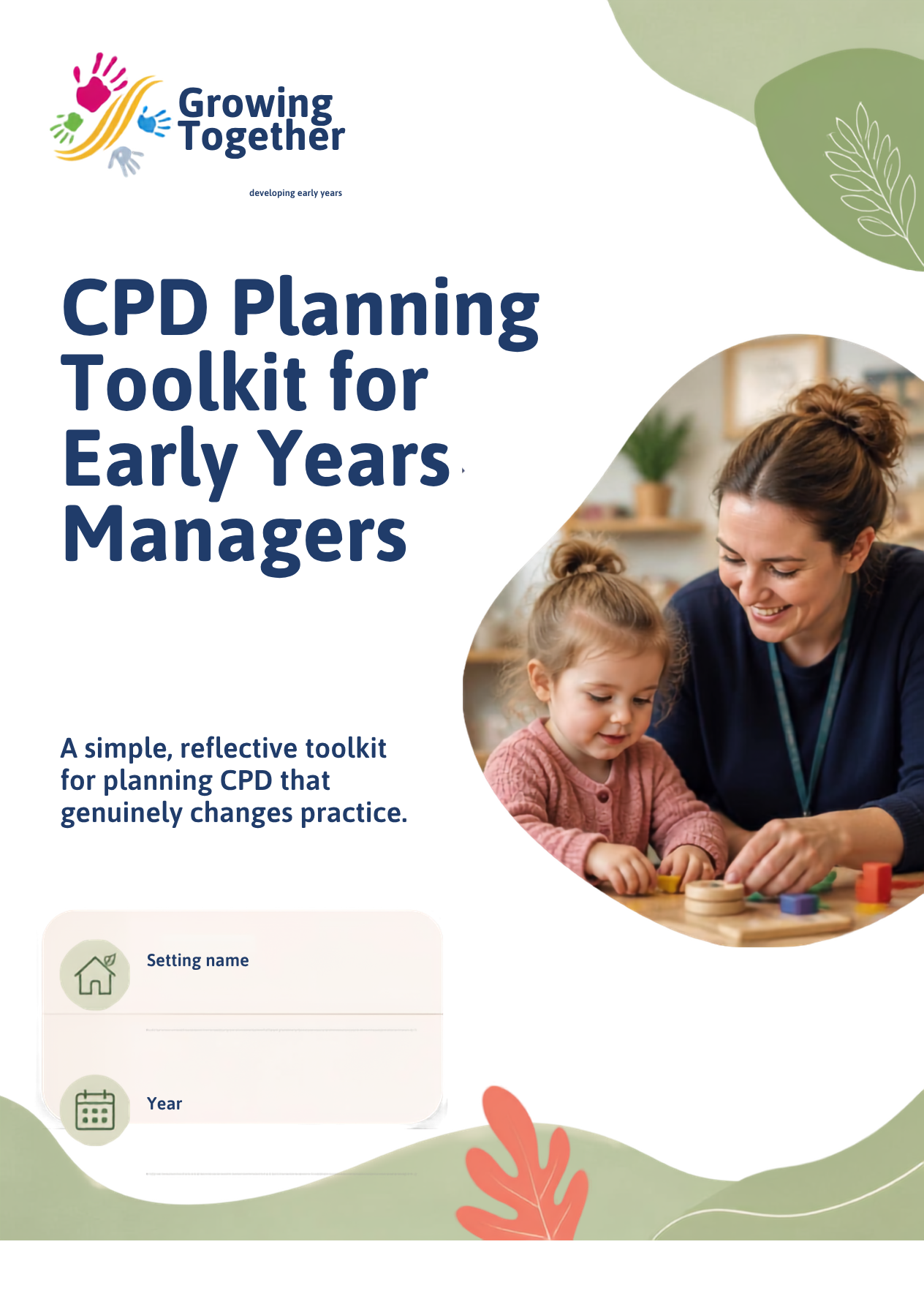
A simple, reflective toolkit for CPD that genuinely changes practice.
Planning CPD shouldn’t feel overwhelming — and it certainly shouldn’t be a tick‑box exercise. This toolkit gives managers a clear, calm structure for planning CPD that is rooted in what children need and what practitioners need to feel confident and consistent.
Inside, you’ll find two beautifully designed templates:
A Setting-Level CPD Planner that helps you identify meaningful priorities, plan learning approaches, and track impact across the year.
An Individual CPD Planner that supports personalised development conversations, strengths-based goal setting, and reflective follow-up.
This toolkit is perfect for managers who want CPD to feel intentional, relational, and achievable. It’s not about filling a calendar — it’s about growing a culture.
Ideal for: nurseries, preschools, childminders with assistants, and early years leaders who want a more thoughtful approach to CPD.
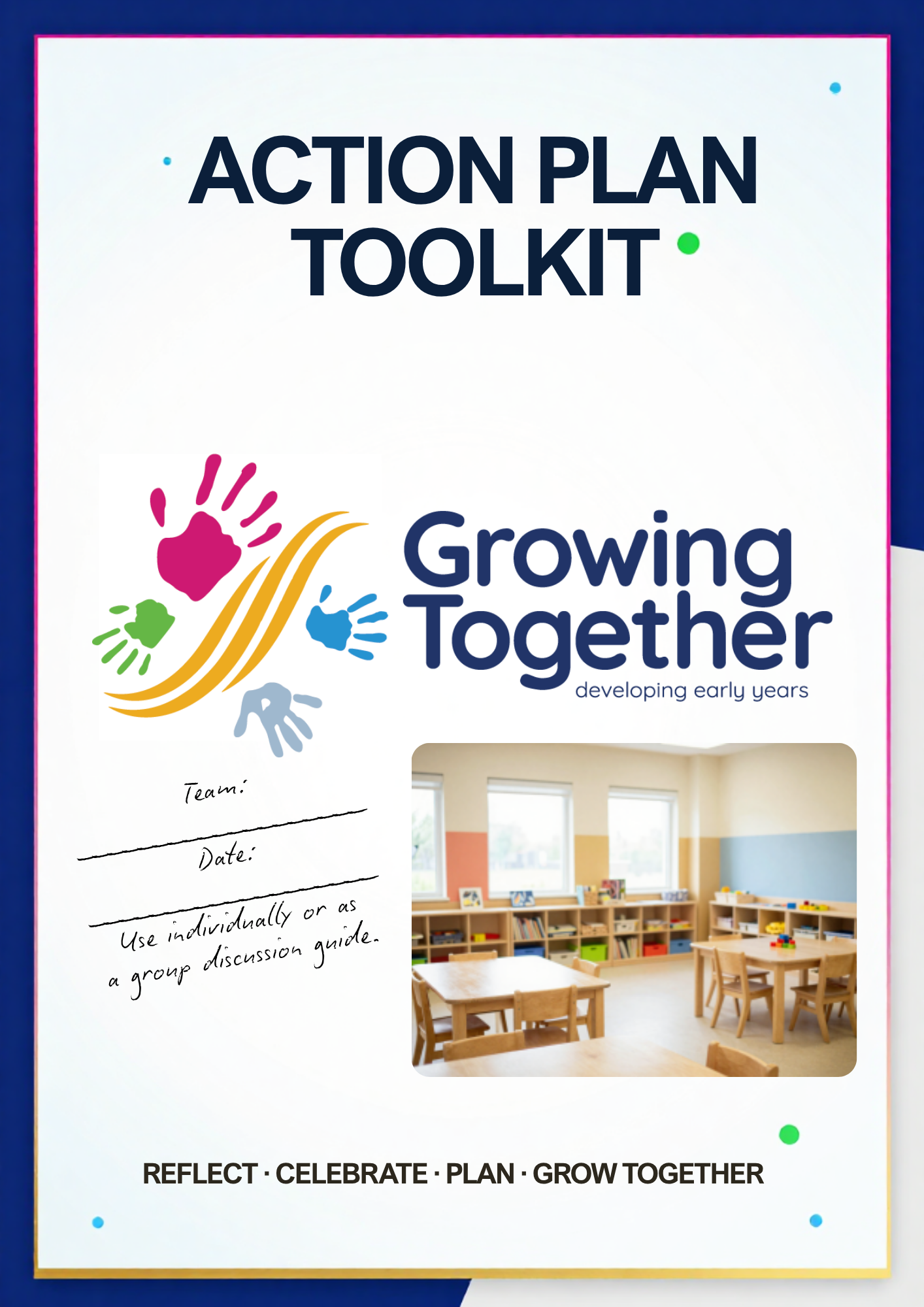
The Action Plan Toolkit from Growing Together Early Years is a practical, nurturing resource designed to help early years practitioners reflect on their practice and plan for meaningful, child‑centred improvement. Created for nurseries, preschools and childminders who value reflective practice, this toolkit supports teams to celebrate achievements, identify challenges, and set clear, purposeful goals for the year ahead.
Built around thoughtful prompts such as “What have we achieved in the last year?” and “Where have we struggled?”, the toolkit encourages honest reflection across key areas including staff development, compulsory training, cohort needs, environment design, routines, transitions and parent feedback. It helps teams understand what last year’s children taught them and what they already know about the cohort joining them next.
With dedicated sections for reviewing indoor and outdoor environments, evaluating resources, and capturing family voice — “Feedback forms, surveys, passing comments – they’re all valuable.” — the toolkit ensures every perspective is considered when shaping your provision.
The final stage transforms reflection into action. Teams are guided to define priorities, assign ownership, identify resources, set deadlines, and agree on success measures. This structured approach supports confident planning and helps settings stay aligned with their vision and values.
Designed to be revisited throughout the year — at the start of a new term, after transitions or whenever your team needs to pause and reconnect — the Action Plan Toolkit is an essential resource for continuous improvement in early years settings.