Nature Connection and Cultural Capital in the Early Years
In early years settings, we often talk about giving children “rich experiences” and “broadening their horizons”—but what does that really look like in practice? Increasingly, practitioners are recognising that one of the most powerful ways to build children’s cultural capital is through meaningful, hands-on connection with the natural world. Nature is not an “extra”; it is a birthright. It is a source of wonder, curiosity, calm, and learning that supports children’s development in ways no classroom resource ever could.
In early years settings, we often talk about giving children “rich experiences” and “broadening their horizons”—but what does that really look like in practice? Increasingly, practitioners are recognising that one of the most powerful ways to build children’s cultural capital is through meaningful, hands-on connection with the natural world. Nature is not an “extra”; it is a birth right. It is a source of wonder, curiosity, calm, and learning that supports children’s development in ways no classroom resource ever could.
Over the past few years, we’ve explored this idea through insect investigations, natural transient art, and outdoor provocations that invite children to look closely, think deeply, and feel part of something bigger. Now, we’re bringing these threads together to consider how nature connection and cultural capital intertwine—and why this matters so much for children today.
🌿 Nature Connection: A Foundation for Well-being and Learning
Nature connection is, at its heart, a relationship. Just as children build relationships with peers and adults, they also build relationships with the world around them—soil, insects, weather, trees, birds, puddles, stones, and everything in between. As explored in our post on Natural Transient Art in Early Years Settings, this relationship is increasingly fragile in modern life. Richard Louv’s concept of nature-deficit disorder reminds us that many children simply aren’t getting the daily contact with nature that supports their emotional regulation, resilience, and sense of belonging.
In early years practice, nature connection can be nurtured through:
Slow looking: pausing to observe a slug eating cucumber or watching bees emerge from a beehive rhyme.
Hands-on exploration: using magnifying glasses, bug pots, and gentle paintbrushes to investigate insects, as shared in our National Insect Week 2023 blog.
Creative expression: arranging pinecones, petals, feathers, and stones into transient art that celebrates natural beauty.
These experiences aren’t just “nice to have”—they are essential for children’s well-being. They help children feel grounded, calm, and connected to something stable and ever-present.
🌱 Cultural Capital: Expanding Children’s Worlds Through Nature
Cultural capital in the early years is about giving children experiences that enrich their understanding of the world and support future learning. Nature offers this in abundance.
When children learn about insects, create natural art, or explore outdoor spaces, they are building cultural capital through:
Knowledge: understanding life cycles, habitats, seasons, and ecological relationships.
Skills: observing, predicting, classifying, measuring, and problem-solving.
Values: care, respect, curiosity, and environmental responsibility.
Experiences: discovering local wildlife, engaging with natural materials, and participating in shared outdoor learning.
For many children, these experiences may be entirely new. Not all families have access to gardens, green spaces, or time outdoors. By embedding nature-rich opportunities into daily practice, we ensure that every child—regardless of background—can develop a deep appreciation for the natural world.
This is cultural capital at its most meaningful: experiences that shape children’s identities, interests, and understanding of their place in the world.
🍃 Connecting Previous Practice: Insects, Art, and Outdoor Curiosity
Our earlier blog posts have already shown how nature-based experiences can transform learning:
National Insect Week 2023
Children’s fascination with insects opens the door to rich learning. The bug box carrier, insect tuff trays, movement games, and simple science experiments all demonstrate how nature can spark curiosity and deepen understanding. These activities build cultural capital by giving children access to knowledge and experiences they may not encounter elsewhere.
Natural Transient Art
Transient art encourages children to slow down, notice details, and express themselves using natural materials. It supports resilience, creativity, and collaboration. It also strengthens nature connection by helping children see beauty and possibility in the world around them.
Together, these posts highlight how nature-based learning is not a one-off event—it is a continuous thread that can run through your provision all year round.
🌼 Practical Ways to Build Nature Connection and Cultural Capital
Here are some simple, sustainable ways to embed nature-rich experiences into your setting:
Create a seasonal nature table with local finds: leaves, feathers, seed pods, stones, shells.
Develop a “nature investigator kit” inspired by our bug box carrier.
Offer daily opportunities for transient art using loose natural parts.
Introduce nature-themed stories, rhymes, and songs to build vocabulary and imagination.
Plan regular “micro-adventures” outdoors: puddle jumping, bark rubbing, cloud watching.
“One of my fondest memories as an Early Years Manager was sitting under a tarpaulin with a group of children listening to the heavy rain. Feeling it in the air. An unforgettable magical moment! It didn’t take hours of planning, hundreds of resources - we were simply present in the moment.” Pauline
Encourage families to collect natural items on walks to contribute to your resources.
Model gentle, respectful interactions with insects and wildlife.
These experiences don’t require expensive resources—just curiosity, intention, and a willingness to slow down and notice.
🌳 Why This Matters Now More Than Ever
In a world where children are increasingly surrounded by screens, structured activities, and fast-paced routines, nature offers something profoundly different: stillness, wonder, and connection.
By prioritising nature connection in early years practice, we are:
supporting children’s mental health
building cultural capital that lasts a lifetime
nurturing environmental stewardship
strengthening children’s sense of identity and belonging
creating joyful, meaningful learning experiences
Nature is not an add-on. It is a powerful, transformative part of early childhood education.
🌾 Final Thoughts
As practitioners, we have a unique opportunity to help children build a relationship with the natural world—one that supports their learning, well-being, and cultural capital. Whether through insect exploration, transient art, or everyday outdoor adventures, nature invites children to be curious, creative, and connected.
And in doing so, we give them something truly precious: a sense of wonder that will stay with them long after they leave our settings.
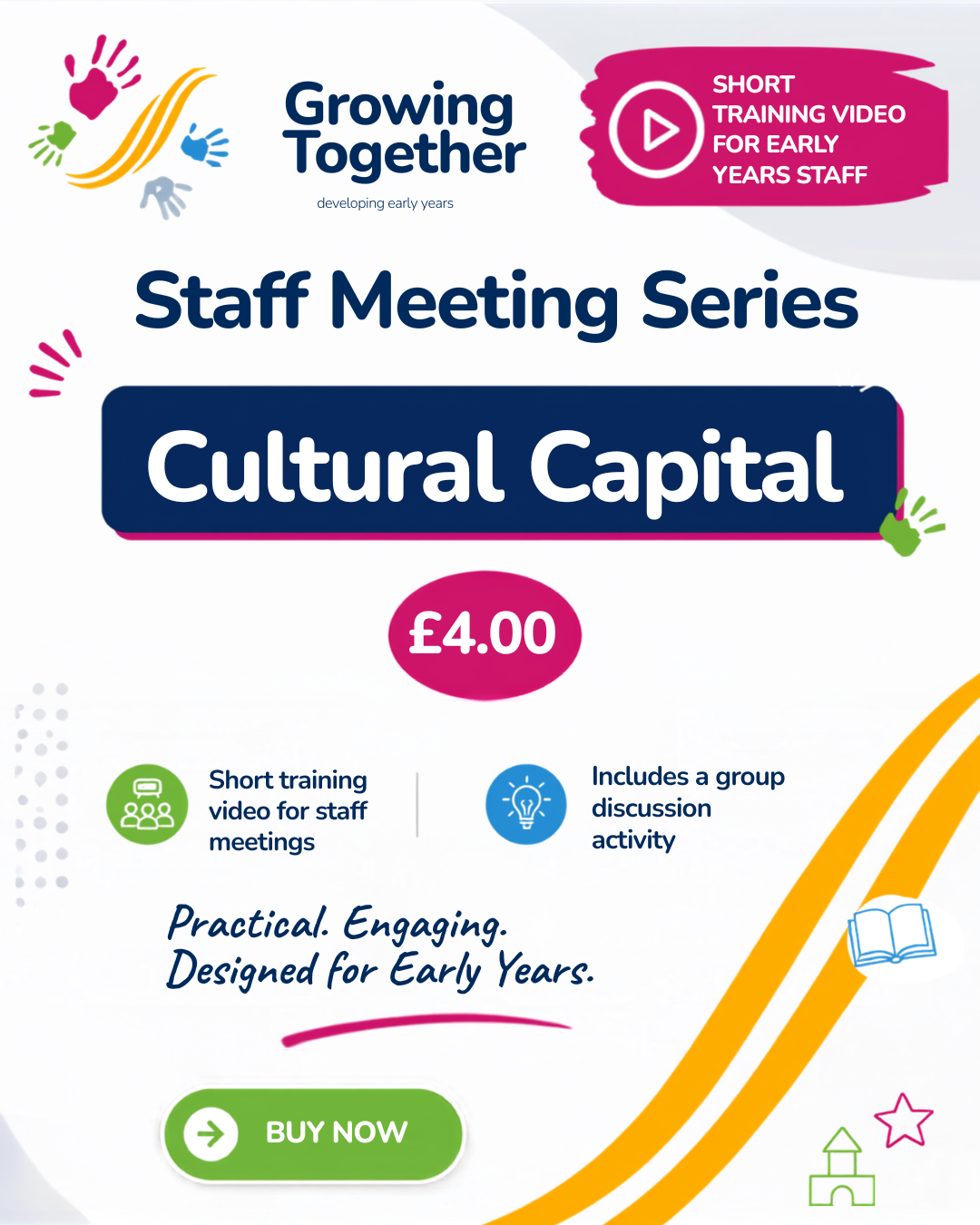
A short, engaging training video created to support staff teams in exploring what cultural capital means in the early years. This video introduces the concept in a clear, accessible way and highlights the importance of recognising and valuing the cultural capital that every child brings into your setting.
Perfect for use within a staff meeting, it concludes with a guided group discussion activity to help deepen understanding and reflect on practice.

5 Ways to Celebrate World Art Day
World art day is a celebration of art around the world, which is inclusive, powerful and diverse. Art is a form of expression in all shapes and forms that is important to who we are…
World Art Day: 15th April 2023
World art day is a celebration of art around the world, which is inclusive, powerful and diverse. Art is a form of expression in all shapes and forms that is important to who we are, our culture, our identity and our sense of self. Sharing art is powerful, it can encapsulate messages, portray emotions, share or meaning and understanding around different situations. Art can bring change, it can challenge us it can bring joy and it deserves to be celebrated!

“The purpose of art is to represent the meaning of things. This represents the true reality, not external aspects.”
Aristotle
Art is a great median for celebrating and extending children’s cultural capital. Cultural capital is the individual experiences that children bring to the classroom or the early years settings. This is personal to each children and is embedded in their life experience so far. As early years educators, we have a role to acknowledge, support and celebrate children’s cultural capital; but we also have the role of providing children with new experiences that develop and build upon the array of experiences they already have. All children deserve to have a childhood that is rich and varied with many opportunities and experiences, regardless of their background.
A short, engaging training video created to support staff teams in exploring what cultural capital means in the early years. This video introduces the concept in a clear, accessible way and highlights the importance of recognising and valuing the cultural capital that every child brings into your setting.
Perfect for use within a staff meeting, it concludes with a guided group discussion activity to help deepen understanding and reflect on practice.
Below we discuss 5 ways that you can get your early years setting involved in celebrating world art day 2023.

Visiting An Art Museum
Visiting an art museum is a great way to celebrate art with children and expose them to a wide variety of different art. Check out when your local museums are open and be sure to risk assess before taking a group of children. You might also want to take clipboards, paper, pens and pencils in case your children feel inspired and want to create their own art.

2. Create Your Own Art Gallery
Display your children’s work and invite parents and carers into the setting to view the children’s very own art gallery. This can also be a great way of raising funds for early years settings charging parents a small admission fee or donation for attending the event.

3. Dance Like No One is Watching
Dancing is great for the soul, children’s development and is sure to put smiles on faces. Play music and dance, have fun, add ribbons and viols to dance with. Get those hearts pumping and those toddlers active! Not only is dancing a form of art and self expression it is also so beneficial to developing children’s physical skills, core body strength, vestibular sense and proprioception.
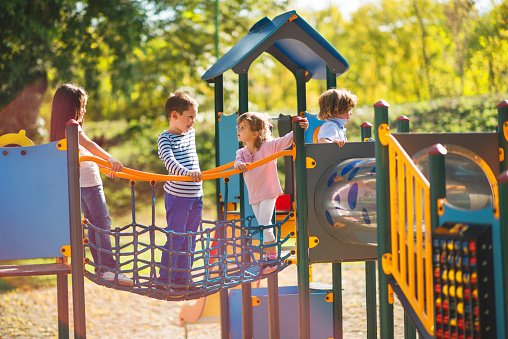
A fantastic webinar for early years practitioners focusing on physical development and the skills we need to focus in the early years before children are ready to write. This 45 minute webinar explores what physical skills children need, with lots of ideas. As well as looking at how we can support children’s physical development within early years settings. It also includes the accompanying slides for the presentation.
4. Share Poetry With The Children
Have a poem of the week or month that you share with the children. Basing small group activities, poetry telling instead of stories with the children using props and actions.

5. Puppet Show
Have a puppet show set up. Encourage the children to make up their own stories using the puppets available. Bring some early literacy and mathematics into the activity, by making tickets for the show and selling them in a pretend box office.