
Over recent months, children's mental health has once again been making headlines. A recent article from the Children's Society highlighted growing concerns that too many young people are waiting until they reach crisis point before receiving the support they need.
For those of us working with children and families, this is not simply a headline. It is something we witness every day.
As practitioners, we are often among the first people to notice when a child is struggling. We see the anxiety that wasn't there before, the changes in behaviour, the withdrawal from friendships, the increasing emotional needs, and the challenges many families face when trying to access support.
When we look beyond individual news stories and review evidence from the Children's Commissioner for England (2025 & 2026), NHS England (2026), Mind (2025), the NSPCC (2026) and the Local Government Association (2025), there is remarkable agreement about what children need.
The message is clear:
Children and young people need support earlier, before difficulties escalate into crisis.
What Is the Current Picture of Children's Mental Health?
Recent UK reports paint a concerning picture.
The Children's Commissioner for England's Children's and Young People's Mental Health Services Report (2026) reported that referrals to children's mental health services had exceeded one million annually, almost doubling compared with 2018/19 levels.
The Care Quality Commission's State of Care Report (2026) also highlighted continued growth in referrals alongside increasing waiting times for many children and young people seeking support.
At the same time, services are working hard to respond. NHS England (2026) reports the continued expansion of Mental Health Support Teams in schools and colleges, while government policy increasingly recognises the value of earlier intervention and prevention.
However, many families continue to experience delays, lengthy waiting lists and challenges accessing appropriate support. Practitioners often find themselves supporting children through these waiting periods, doing their best to bridge the gap while formal support is sought.
Why Early Intervention Matters
One of the strongest areas of agreement across recent research is the importance of early intervention.
The NSPCC's Early Help and Early Intervention Guidance (updated 2026) highlights evidence showing that identifying and addressing needs early can improve outcomes, strengthen protective factors and reduce the likelihood of more serious difficulties developing later.
Similarly, the Local Government Association's Children and Young People's Mental Health Briefings (2025) argue that support should not focus solely on treating mental illness but also on helping children and families cope with challenges before difficulties escalate.
For those working in early years, schools, youth services and family support, this reinforces something we have long understood.
Children's emotional wellbeing is built through relationships, belonging, stability and connection.
Mental health support does not begin when a referral is made.
It begins when trusted adults notice, listen and respond.
Children's Mental Health Is About More Than Mental Health Services
Another consistent finding across the latest reports is that children's mental health cannot be separated from the wider world around them.
The Children's Commissioner for England (2025) highlighted factors such as poverty, social isolation, safety, educational experiences and family circumstances as significant influences on children's wellbeing.
The NSPCC (2026) continues to emphasise the impact that abuse, neglect and adverse childhood experiences can have on children's mental health and long-term outcomes.
The Local Government Association (2025) has also highlighted the importance of family support, community resilience and whole-household approaches.
These reports remind us that mental health exists within a wider social context.
Children do not experience difficulties in isolation. Financial pressures, housing insecurity, transport challenges, reduced community resources and fewer opportunities to access safe outdoor spaces can all influence children's emotional wellbeing and sense of belonging.
Practitioner Reflection
What We Are Seeing on the Ground
As people who work with children and young people every day, we do not need reports to tell us that there is a growing mental health crisis.
We see it.
We experience it.
We work alongside it every day.
We are coming into contact with increasing numbers of children who are struggling with their emotional wellbeing and mental health. We regularly encounter barriers to support, whether that is lengthy waiting lists, high referral thresholds, or families being told that a child does not yet meet the criteria for specialist intervention.
Alongside this, we are witnessing wider social pressures that inevitably affect the children and families we support.
The continuing cost of living challenges place additional strain on household finances. For some young people, cuts to public transport can contribute to isolation, reducing access to activities, friendships and support networks. Across many communities, the reduction of accessible green spaces and community resources has also limited opportunities for children to play, connect and experience the benefits of time outdoors.
These factors alone do not cause poor mental health, but they create pressures that can impact children's sense of security, resilience and overall wellbeing.
This is why the role of practitioners has never been more important.
While we may not be able to remove every challenge a family faces, we can provide something incredibly powerful:
Consistency
Connection
Safety
Compassion
A trusted relationship
Often, these become some of the strongest protective factors in a child's life.
What Can Practitioners Do?
While many of the challenges highlighted within national reports may feel beyond our control, there are practical steps we can take every day.
1. Prioritise Connection Before Correction
Children who feel emotionally safe are more likely to communicate their needs and seek support.
Before responding to behaviour, consider what the child may be communicating through it.
Ask yourself:
What might this child be feeling?
What need are they expressing?
What support do they need from me right now?
2. Build Emotional Literacy Into Everyday Practice
Children need opportunities to understand and express feelings.
Practical strategies include:
Using emotion cards and visual prompts
Exploring feelings through stories
Modelling emotional language
Encouraging children to name emotions
Reflecting emotions back to children
Helping children build emotional vocabulary gives them tools to communicate before emotions become overwhelming.
3. Notice the Small Changes
The earliest indicators of emotional distress are often subtle.
Be curious about:
Changes in play
Withdrawal from peers
Increased anxiety
Reduced confidence
Changes in mood
Difficulty with transitions
Often it is the accumulation of small observations that helps identify a child who may need additional support.
4. Strengthen Relationships With Families
Parents and carers know their children best.
Creating welcoming and non-judgemental opportunities for conversation helps build trust and allows concerns to be identified early.
Effective support works best when families and practitioners work in partnership.
5. Create Opportunities for Belonging
A sense of belonging is one of the strongest protective factors for mental health.
Consider:
Do children feel heard?
Do they feel represented in the environment?
Do they have meaningful choices?
Do they feel valued and included?
Belonging supports wellbeing long before difficulties emerge.
6. Make Time for Nature
Access to outdoor play and natural environments can positively support emotional wellbeing, physical health and self-regulation.
Small opportunities for outdoor exploration, gardening, den building or simply spending time in nature can have a meaningful impact.
7. Look After Practitioner Wellbeing Too
Supporting children's mental health is emotionally demanding work.
Practitioners need support, supervision, reflection and opportunities to look after their own wellbeing.
Children benefit most when the adults around them feel supported too.
Looking Ahead
There is increasing agreement across government bodies, charities, health services and local authorities that the future of children's mental health support must include earlier intervention, stronger community support and easier access to help.
The expansion of school-based mental health support, community hubs and preventative services suggests a welcome shift away from a purely crisis-led approach.
While there is still much work to do, there is growing recognition that children's mental health is everyone's responsibility.
Final Thoughts
When we hear statistics about waiting lists and rising referrals, it can be easy to feel overwhelmed.
Yet behind every statistic is a child who wants to feel safe, connected and understood.
As practitioners, we cannot eliminate poverty, solve service pressures or instantly reduce waiting times.
But we can build relationships.
We can create safe spaces.
We can notice when something changes.
We can listen.
We can respond early.
And according to the latest evidence, these everyday acts of care may be some of the most important forms of early intervention we can provide.
Further Reading
Children's Society (2026) – Mental Health Support for Young People Source
Children's Commissioner for England (2026) – Children's and Young People's Mental Health Services 2024/25 Source
NHS England (2026) – Children and Young People's Mental Health Source
NHS England (2026) – Mental Health Support Teams in Schools and Colleges Source
Mind (2025) – Care Before Crisis Source
NSPCC (2026) – Early Help and Early Intervention Source
Local Government Association (2025) – Children and Young People's Mental Health Source
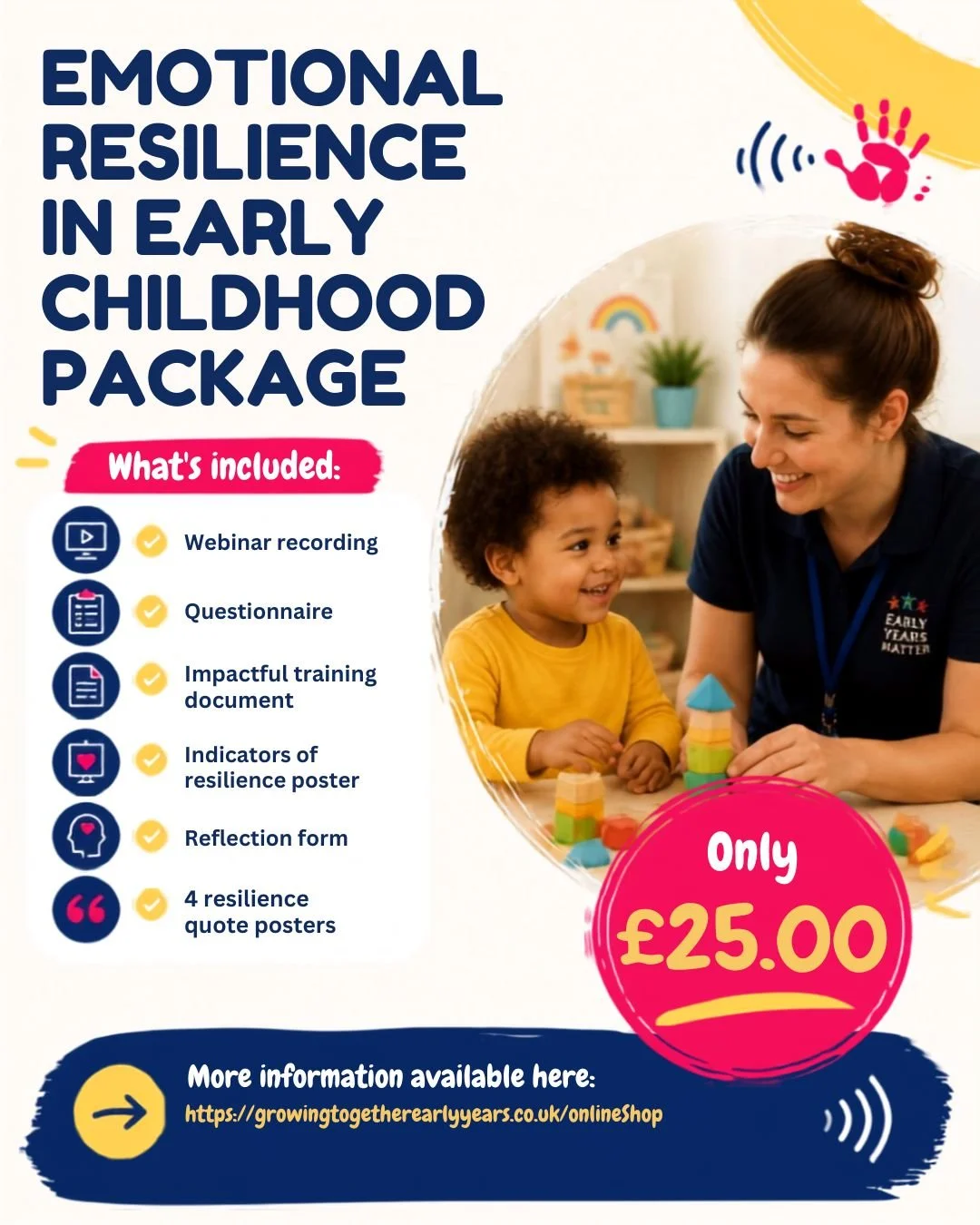
In an ever-changing world we want to see a future generation who have resilience in the face of uncertain circumstances. This package contains several resources for practitioners working in the early years explores what we mean by the term resilience, current research on resilience in early childhood and how as professionals we can support children to develop resilience. As well as making impactful changes to our settings and practise to support the resilience of the setting.
The package includes the following:
Recording of our webinar ‘Emotional Resilience in Early Childhood’ and accompanying PowerPoint presentation.
A certificate to say that you have watched the recording to add to your CPD file.
Emotional resilience in childhood questionnaire.
Impactful training document - allowing individuals to reflect on the webinar and make sure it is impactful to their setting.
Indicators of resilience poster in both pdf and png format.
Resilience intent, implementation and impact reflection form.
4 resilience quote posters in both pdf and png format.